
BC Game Crash online is pretty straightforward once you know where the buttons are and what you should check before betting. In practice, you’ll sign in, pick a stake size, and place your first round while watching your balance and connection stability. If you do those three things, you’ll avoid most early headaches.
Start by confirming you’re on the correct crash game page, then get your account ready for deposits and withdrawals. For many players, bc game crash online becomes the fastest way to land on the right interface without wandering through menus. After that, take a minute to read the betting panel and locate the “Auto” or “Manual” controls if the site offers them. You can begin immediately, but it’s smarter to run one low-stakes round first.
Set Up Your Account and Access the Crash Lobby
Before you place a bet, make sure your account is usable and your payment method is ready. I’ve seen players lock themselves out by rushing through verification, then they can’t fund in time. Typically, you’ll need an account login and a deposit option that matches your region. If you’re using crypto, expect a wallet address flow and a confirmation step that can take a few minutes depending on network traffic. However, if you’re patient, the setup is quick.
Choose a Reliable Entry Point
Once you’re logged in, navigate directly to the crash game lobby so you don’t confuse it with other casino modes. A clean way to do that is to use the official page shortcut on your browser, like https://bcgame-crypto-ru.com/en/crash/, then bookmark it for later. When you arrive, look for a clear “Crash” label and the round timer. If the timer looks stuck or the graph won’t update, refresh once and check your connection. Notably, most “it’s not working” complaints are really browser cache or a flaky network.
Fund Your Balance Before You Bet
Crash rounds move fast, so you don’t want to discover funding delays mid-session. Most players start with a small deposit range they can comfortably lose, then scale up only after a few rounds. If the platform supports crypto deposits, confirm the minimum deposit and whether it requires a specific network. For example, you might choose a stablecoin for lower volatility, or you might use the chain the site lists prominently. As a rule, keep at least a couple of rounds worth of balance so you can observe patterns without panic.
Place Your First Bet and Understand How Crash Works
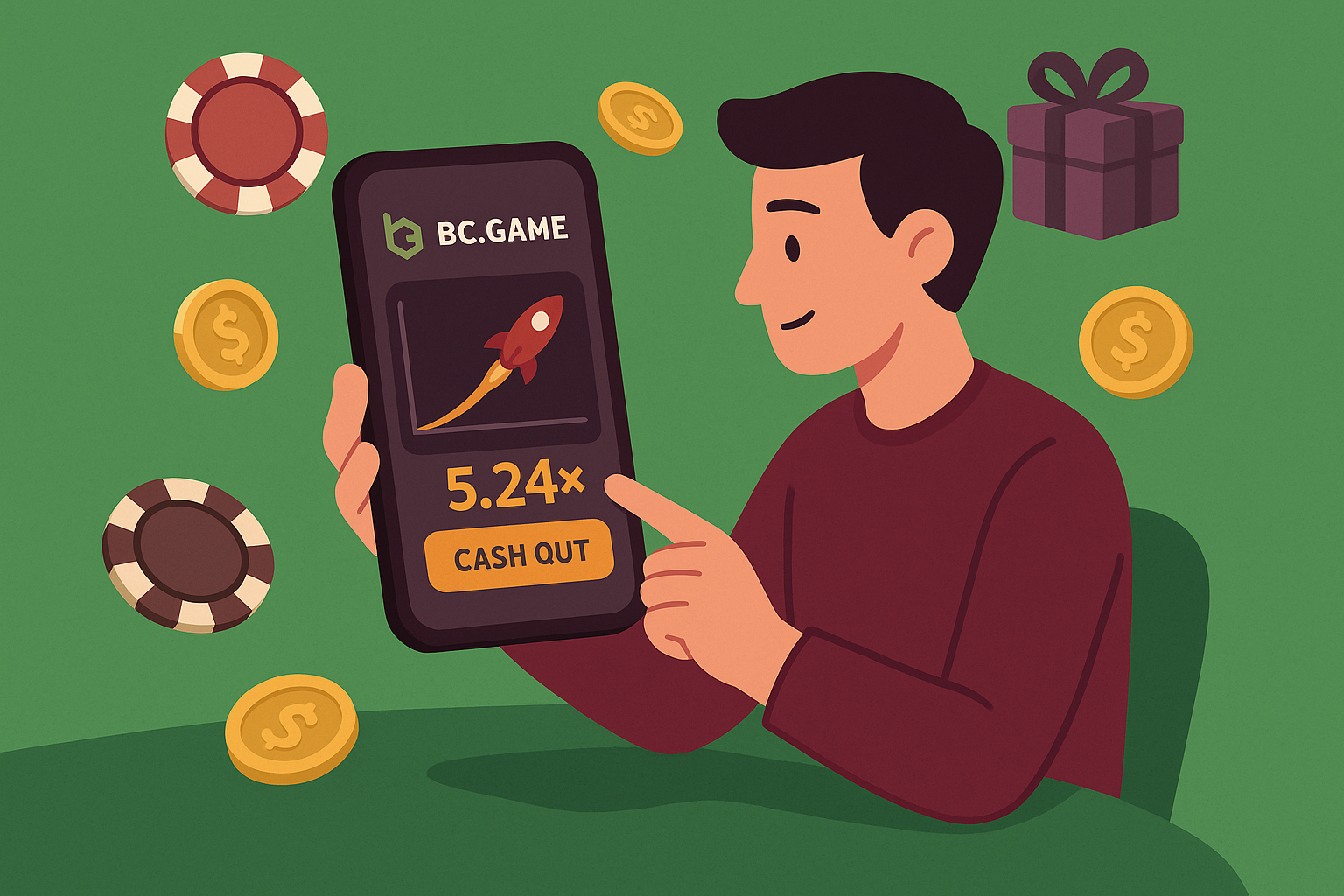
In crash, a multiplier rises from 1.00x and continues until it “crashes” at a random point. Your job is to decide when to cash out before the crash happens. The interface usually shows the live multiplier, your bet amount, and a cash-out button or an auto-cash setting. If you’re new, start with manual cash-out so you can feel the speed and learn how the graph updates. Then, after you’re comfortable, you can experiment with automation.
Pick a Stake and Cash-Out Style
When you place your first bet, select a stake you’re willing to lose without changing your mood. A common approach is to use a fixed small amount—think “one unit” per round—and only vary the cash-out point. If you’re unsure, set a conservative cash-out target like 1.5x or 2.0x and keep it consistent for several rounds. On the other hand, some players try to chase higher multipliers right away, which is where frustration starts. To be fair, high targets can pay, but new players often misjudge how quickly the multiplier climbs.
Follow the Round Timer and Avoid Common Mistakes
Watch the round timer and place your bet before the next round locks in, not after it starts. Then, when the multiplier is rising, decide whether to cash out early or wait. One mistake I see often is placing a bet too large relative to the balance, then cashing out late because you feel “it should hit.” Another is using auto-cash with an unrealistic target, then forgetting to check if the setting saved correctly. If you want a simple learning loop, do three scenarios: a low target (1.3x to 1.5x), a mid target (1.8x to 2.2x), and a late target (2.5x to 3.0x). Keep notes on how often each style works for you, even if your goal is just practice.
Use the Interface Tools Like a Pro
Most crash lobbies show historical results, recent multipliers, and sometimes “risk” or bet modifiers depending on the version. Spend a minute verifying what you’re looking at, because “history” can include different time windows. If you see a chart, use it as context rather than a promise of what will happen next round. You can also adjust your bet size between rounds, but do it deliberately. Many players also like to test with a small bet first, then increase only after the page confirms your stake and cash-out setting.
Manage Sessions, Withdrawals, and Safety Checks
Once you’ve placed a few bets, switch from “learning mode” to “session management.” Decide a time limit and a loss limit before you start, because crash can tempt you into chasing. If the site shows your results clearly, review them after every 10 rounds instead of after 100. For withdrawals, check the minimum withdrawal amount and the processing time range, since it can vary by method. Also, keep an eye on account security settings, especially if you log in from different devices.
Set Limits That Keep You in Control
For example, you might start with a budget that covers 50–80 small rounds, then stop if you’re down 10–20% from your starting balance. Another scenario is a “profit lock” approach, where you cash out when you reach a small gain target and then stop. If you play late at night, reduce your stake because attention drops, and crash doesn’t slow down. When you do increase stakes, increase gradually—one step at a time—so one bad run doesn’t derail your day. That’s boring advice, but it works.
Know When to Take a Break
If you notice repeated connection hiccups—like delayed button presses or the multiplier freezing—pause and fix it first. Reloading can help, but don’t assume the bet placed correctly if the page didn’t update. A good habit is to confirm your last round outcome before placing the next one. Also, if you’re using a browser with aggressive tracking blockers, you may need to allow site scripts so the crash timer stays accurate. In those cases, bcgame-crypto-ru.com/en/crash/ can be a useful reference point for returning to the correct crash page without hunting around.
Withdraw and Keep Records
When you decide to withdraw, do it after you’ve confirmed your balance and the withdrawal method is selected correctly. Some players prefer to withdraw in smaller batches so they’re not waiting too long for a single payout. Keep screenshots or simple notes of transaction IDs and timestamps, especially if you used crypto. If something seems off, having that record speeds up support. As you continue, consider reviewing your session notes and asking whether your strategy is improving or just changing names.
Stay Aware of Platform Options
Crash games sometimes sit alongside other modes, promotions, or different stake tables, so it’s easy to mix up settings. Before every session, confirm you’re on the crash game table you intend to play and that your cash-out method matches your plan. If the platform offers features like auto-bet or bet limits, turn them on intentionally rather than leaving defaults. For many newcomers, the simplest routine is: open the page, verify the crash lobby, place a small test bet, then scale only when everything feels stable. Once you’re confident, you can explore more advanced options offered by BC Game without losing track of the basics.
- Start with a small stake and a fixed cash-out target for the first 5 rounds.
- Use manual cash-out at first, then try auto-cash only after settings are confirmed.
- Set a loss limit and a time limit before you play, not after you’re already stressed.
- Confirm your connection and page updates if the multiplier display seems delayed.
- Withdraw strategically and keep basic records of transaction details.
If you follow that order—account ready, crash lobby confirmed, first low-stakes round, then disciplined scaling—you’ll spend less time troubleshooting and more time learning. The real skill in crash isn’t predicting the next multiplier; it’s choosing when to cash out consistently under pressure. After a handful of sessions, you’ll recognize your own decision patterns and be able to adjust without guessing. And when you do want to change anything, do it one variable at a time so you can actually tell what helped.
